How Local Conditions in Wantage NJ Influence Norweco Singulair Green Performance


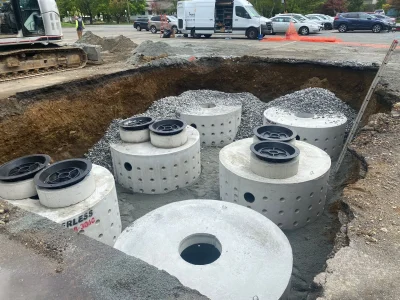
A treatment unit never operates in a vacuum. The tank, the controls, the blower, the discharge pattern, the soil around it, the grade above it, the weather moving through it, and the habits inside the home all push performance in one direction or another. That is especially true with a Norweco Singulair Green system in a place like Wantage, New Jersey, where site conditions can shift quickly from dry summer spells to frozen winter ground to heavy spring saturation.
Homeowners sometimes expect packaged treatment systems to behave the same way everywhere. On paper, that would be convenient. In the field, it is rarely true. A Norweco Singulair Green unit can perform very well, but the results depend heavily on where it is installed, how the property drains, how the home is used, and how carefully it is maintained. When someone asks why one system runs quietly for years while another struggles with alarms, odors, or uneven discharge, the answer is often local, not mysterious.
Wantage provides a good example of that reality. The township includes sloped lots, wooded properties, areas with shallow rock, variable soils, seasonal groundwater concerns, and winter conditions that matter more than many people realize. Those factors do not automatically create problems. They do mean that design, installation, and service need to match the site rather than rely on generic assumptions.
Why geography matters more than the brochure
The Norweco Singulair Green is an aerobic treatment system. Like other aerobic units, it relies on controlled biological treatment, mechanical components, and steady flow patterns to do its job. That combination can produce high quality effluent when conditions are right. It is also less forgiving than a simple passive tank when local conditions are ignored.
In Wantage, the first issue I tend to think about is water, both too much of it and where it moves after a storm. On many properties in Sussex County, runoff does not disappear quickly. It tracks across grades, settles in low spots, and can saturate the area around tanks, pump chambers, or discharge lines. A treatment system installed in a convenient low area may look fine during dry weather, then reveal its weaknesses during a wet spring.
Temperature is the second big local factor. Winters in Wantage are not theoretical. Extended cold, frost depth, and freeze-thaw cycles affect exposed piping, shallow discharge lines, blower operation, and the biological activity inside the unit. Aerobic treatment continues through winter, but cold weather narrows the margin for sloppy installation and deferred maintenance.
The third factor is property layout. Many homes in Wantage are not on tiny suburban lots with perfectly predictable utility corridors. They may sit on acreage, with long runs between the house and the treatment area. Longer runs create more opportunities for settling, infiltration, root intrusion, and elevation challenges. Each one influences how a Norweco Singulair Green performs over time.
Soil conditions shape what happens after treatment
People often focus on the treatment unit itself, but the receiving environment matters just as much. Even high quality effluent must go somewhere, whether to subsurface dispersal, a polishing component, or another approved discharge method based on local regulations and design.
Wantage soils can vary significantly from one parcel to the next. Some areas drain reasonably well. Others hold water, contain a higher clay fraction, or sit over restrictive layers that limit infiltration. In practical terms, that means the same treated water can behave very differently on two neighboring properties.
If a site has slower soils, water lingers longer. That can reduce the effective capacity of the dispersal area, especially during rainy periods. If the system was sized too tightly or the installation left little room for seasonal saturation, performance complaints often show up first as backups, alarms, soggy ground, or a system that seems to work fine nine months out of the year and poorly the other three.
On shallow or rocky sites, excavation constraints can create design compromises. Contractors may have less flexibility on tank depth, piping slope, and component placement. A well-planned install accounts for those constraints early. A rushed install tends to hide them until the first wet season or hard freeze.
This is one reason generic advice about septic care often misses the mark. The biology inside the treatment unit might be standard. The land outside it is not.
Rainfall, snowmelt, and the problem of excess water
A Norweco Singulair Green system is designed to treat household wastewater, not groundwater and roof runoff. That sounds obvious, yet many service issues come back to excess clear water entering the system or saturating the area around it.
In Wantage, late winter and spring can be particularly revealing. Snowmelt combines with rain, and ground that is still partially frozen drains poorly. If gutters dump near the treatment area, if foundation drains are misdirected, or if surface grading channels water toward the tanks, the system ends up surrounded by water it was never meant to handle.
That affects performance in several ways. Tanks under hydraulic pressure can experience infiltration through risers, lids, seals, or compromised joints. Pump chambers cycle more often. Effluent has fewer good pathways to move away from the site. Alarm events become more common. Even when there is no immediate backup, treatment consistency can suffer because the whole system is operating in a stressed, overly wet environment.
I have seen properties where the treatment unit itself was mechanically sound, but shallow swales directed stormwater right over the tank field. The owner assumed the septic system was failing. The larger problem was drainage. Once grading was corrected and roof leaders were extended farther away, the wet spots diminished and service calls dropped. That kind of outcome is common enough that I rarely separate septic evaluation from site drainage evaluation.
Cold weather changes the margin for error
Winter operation in Wantage is one of the clearest examples of local conditions influencing system performance. Aerobic systems generate and retain some warmth through biological activity and incoming household water, but they are not immune to freezing. Components near the surface, especially in lightly used homes or vacation properties, are more vulnerable.
Low occupancy is a surprisingly important factor. A full-time household sends a steady flow of relatively warm water into the system. A part-time or lightly occupied home may not. In cold weather, that reduced flow can allow temperatures in piping and treatment compartments to fall enough to create sluggish performance or freeze risk at shallow points.
Discharge lines are another weak spot if they are routed without enough protection. A line that works perfectly in July may become troublesome in January if it is too shallow, poorly insulated by cover, or exposed to wind-scoured areas with little snow insulation. Snow, ironically, can help. Bare ground often freezes deeper than snow-covered ground.
Cold conditions also expose blower or aeration issues quickly. If aeration weakens because of neglected maintenance, airflow restrictions, or aging components, treatment can become less stable just when biological activity is already under seasonal stress. Homeowners sometimes notice winter odors and assume the cold caused the problem. More often, winter made an existing weakness impossible to ignore.
Household water use in rural homes is rarely uniform
Many homes in Wantage do not behave like textbook design flows. Some have large families. Some have two people most of the year and ten people over holiday weekends. Some have water softeners, whirlpool tubs, high-efficiency fixtures, unfinished basements that later become living space, or outbuildings that change how the property is used.
Aerobic treatment units prefer regularity. They handle normal daily variation, but sharp surges followed by long idle periods can make treatment less consistent. A big laundry day, several back-to-back showers, and a dishwasher cycle do not necessarily overwhelm a properly sized system, but repeated hydraulic peaks reduce residence time and can move solids farther than intended.
Softener backwash is one of those gray areas that deserves judgment rather than blanket statements. The concern is not just water volume. It is periodic concentrated discharge entering a biological treatment process. Depending on system layout and household habits, that extra load may be insignificant or may contribute to cycling and treatment instability. That is why a good site review includes the actual plumbing fixtures and discharge points in the home, not just bedroom count on a permit.
For homeowners trying to get the best performance from a norweco singulair green Wantage NJ installation, usage patterns matter almost as much as the equipment brand. Two homes with identical systems can experience very different results because one spreads water use throughout the week and the other concentrates it into heavy bursts.
Maintenance quality shows up faster in challenging local conditions
A Norweco Singulair Green system is not a set-it-and-forget-it piece of infrastructure. It has moving parts, electrical controls, and treatment components that need periodic inspection and service. In a forgiving environment, neglected maintenance may take a while to cause visible trouble. In a place with wet seasons, cold winters, and variable soils, the penalty for neglect arrives sooner.
That does not mean the system is fragile. It means the operating window is narrower when local conditions are already working against it. A clogged filter, a weak aerator, a failing pump, or an unnoticed alarm becomes more significant when the site is saturated or the ground is frozen.
The strongest maintenance programs are not just box-checking visits. They include observation of the full site. A technician should notice if lids are taking runoff, if risers sit too low, if venting appears compromised, if discharge areas remain wet after dry weather, or if roots are starting to affect access and piping. Those field details often matter more than a clean service log.
Here are the issues that tend to deserve the closest watch on systems in Wantage:
- Surface water movement around tanks, risers, and discharge areas
- Winter vulnerability of shallow pipes and exposed components
- Seasonal high water effects on pump cycling and dispersal performance
- Changes in household occupancy or water use patterns
- Vegetation and root growth near buried lines and access points
A homeowner reading this might wonder whether these checks are overly cautious. They are not. Most expensive septic problems build from small site-related warnings that were visible months earlier.
Site grading can help or hurt more than people expect
One of the most overlooked influences on system performance is grade. I do not mean dramatic topography only. Small grading decisions around the house and yard can change how water behaves around treatment components.
A swale cut for landscaping can direct runoff toward a tank lid. norweco singulair green Wantage NJ A new shed pad can block a natural drainage path and trap water near the dispersal area. A driveway widened with fill can alter elevations enough to send snowmelt where it never went before. None of those changes look like septic modifications to the homeowner, but all of them can affect system performance.
On sloped Wantage lots, uphill runoff deserves special attention. Water does not care where the permit drawing says the septic system ends. If stormwater moves downhill across the treatment area, the system bears that load regardless of design intent. Good grading diverts water around the system, not across it.
This is also why final site restoration matters after installation. Poorly compacted backfill can settle over time, creating shallow depressions that hold water over lids, seams, or lines. The treatment unit may function well for a year or two, then start showing nuisance issues that trace back to post-install settlement rather than core equipment failure.
Trees, roots, and rural landscaping pressures
Wantage properties often have mature trees or homeowners who value a wooded setting. That is understandable. It is also a practical concern for buried infrastructure.
Roots respond to moisture and nutrients. Septic lines, seams, and disturbed soils can attract them. Even when a modern installation is initially tight, roots can exploit tiny imperfections over time, especially in older piping or at connection points. The problem is rarely dramatic at first. It starts as a partial restriction, a subtle wet area, or a maintenance visit that notes slower than expected movement through a line.
Landscaping choices over and around the system matter. Deep-rooted plantings placed for privacy or erosion control can create future service issues. Heavy decorative features can compress soils or make access difficult. Even routine lawn irrigation, if it keeps the area consistently wet, can reduce the soil's ability to accept treated water during already saturated periods.
In a rural setting, there is always tension between using the yard naturally and protecting buried treatment infrastructure. Good planning finds a balance. The wrong approach turns the septic area into the nicest growing zone on the property, which usually ends badly.
Installation details make local conditions either manageable or risky
The same Norweco unit can have a very different long-term record depending on installation quality. This is not brand-specific criticism. It is field reality.
If the installer accounts for groundwater, protects elevations, uses proper bedding, seals components well, and plans for maintainable access, the system has a strong chance to perform as intended. If corners are cut, local conditions exploit those weak points.
A few examples make the point. A riser set slightly below grade may look harmless during dry weather, then admit runoff during every major storm. Piping with marginal slope may move wastewater adequately until cold weather slows things down and solids start hanging up. A discharge area selected for convenience rather than site suitability may work until spring saturation reveals that the soil was never as accepting as it appeared in August.
This is where local experience matters. Installers and service providers who know Wantage and the surrounding Sussex County conditions often recognize warning signs faster than someone relying strictly on a standard detail. They know which areas tend to stay wet longer, where frost issues are common, and how certain lot configurations behave after heavy precipitation.
Warning signs homeowners should not ignore
Septic systems rarely fail without giving hints first. The problem is that those hints often seem small or unrelated. A faint odor after rain, a high-water alarm that clears, a patch of greener grass, or a discharge point that stays wet too long may be treated as temporary annoyances. Sometimes they are temporary. Often they are early indicators that local conditions are exposing a weakness.
The most useful homeowner habit is observation across seasons. The yard in March tells a different story than the yard in August. If a system area is only problematic during wet weather, that does not make the issue less real. It usually means the site is near its hydraulic limit during certain months.
These are the signs worth documenting and reporting early:
- Recurring alarms, even if they reset or seem intermittent
- Wet or unusually soft ground near treatment components after dry weather
- Odors that appear during rain, thaw, or heavy use periods
- Plumbing that drains more slowly at the same time yard symptoms appear
- Changes after grading, landscaping, or occupancy shifts in the home
A dated phone photo after a storm can be surprisingly helpful to a service professional. It captures conditions that may not be visible when the technician arrives later.
Local regulations and approvals are part of performance, too
Performance is not only a mechanical issue. It is also a compliance issue. In New Jersey, onsite wastewater systems operate within state and local regulatory frameworks, and those requirements influence design choices, discharge options, and maintenance expectations. A system that appears functional from the homeowner's perspective may still be inappropriate if site conditions no longer align with the approved configuration or if unpermitted property changes have altered the load.
That matters in Wantage because properties evolve. Additions are built, basements are finished, accessory dwellings are discussed, drainage patterns shift, and ownership changes bring different usage habits. Any of those can affect whether the original treatment setup still fits the site.
When people search for advice on norweco singulair green Wantage NJ performance, they are often really asking a broader question: is my system suited to my property as it actually exists today, not just as it was drawn years ago? That is the right question. Sometimes the answer is yes, with routine maintenance. Sometimes the answer is yes, but only if site drainage or water use habits improve. Sometimes the answer is that a professional reassessment is overdue.
What good long-term performance usually looks like
norweco singulair green Wantage NJThe best-performing systems in areas like Wantage are not necessarily the newest. They are the ones where several practical decisions line up. The unit is correctly matched to the home. The site directs water away from critical components. Access for service is straightforward. Seasonal vulnerabilities were anticipated rather than discovered the hard way. Occupants know what not to flush, how to spread major water use, and when to call for service.
When that happens, the system tends to be uneventful, which is exactly what most homeowners want. Effluent treatment remains stable. Alarms are rare. The yard stays dry under normal conditions. Service visits become routine maintenance instead of emergency response.
There is also a mindset component. Owners who do best with aerobic treatment systems treat them like mechanical infrastructure, not buried mystery boxes. They pay attention after major storms. They remember that winter can change system behavior. They understand that one unusually wet season does not mean automatic failure, but it does justify inspection.
For a Norweco Singulair Green in Wantage, local conditions are not just background scenery. They are active participants in how the system performs year after year. The more accurately those conditions are understood, the fewer surprises the system tends to produce.
Excavating New Jersey LLC
406 County Rd 565
Wantage, NJ 07461, United States
Phone: +1 (973) 791-4284
FAQ About norweco singulair green Wantage NJ
How does a Norweco septic system work?
Singulair Green uses aerobic biological treatment in a polyethylene tank, followed by settling and filtration. The treatment unit is one part of a complete wastewater system; the site design also determines how treated effluent is dispersed.
How much does a Norweco septic system cost in NJ?
A useful estimate requires a property evaluation. Excavation access, soil conditions, engineering, electrical work, the disposal field, and restoration can affect the total. Ask Excavating New Jersey LLC for a written scope that distinguishes installation costs from ongoing service costs.
Are Norweco septic systems good?
Singulair Green is an established aerobic treatment option, but suitability depends on the property and proposed design. Compare the model's documented performance, maintenance needs, and total project scope with alternatives before deciding.